


%2520ENJAL-banner(NEW).png)

Company Overview
Company: KINTO Corporation (Toyota Group)
Industry: Mobility Services
Service: Car Subscription Service “KINTO”
Marketing Structure: Fully In-House Digital Marketing Team
KINTO Corporation, a Toyota Group mobility services company, operates the car subscription service “KINTO”, which provides consumers flexible alternatives to long-term car ownership. Unlike many companies that outsource advertising operations, KINTO manages strategy and execution entirely in-house through its Digital Marketing Group.
As the company scaled its use of AI-driven campaigns such as Google Performance Max (P-MAX), the team faced a growing challenge: maintaining data quality while expanding aggressively. To address this, KINTO implemented Spider AF to protect campaign performance and brand integrity.
The Challenge
Scaling AI-Driven Campaigns Without Compromising Data Quality
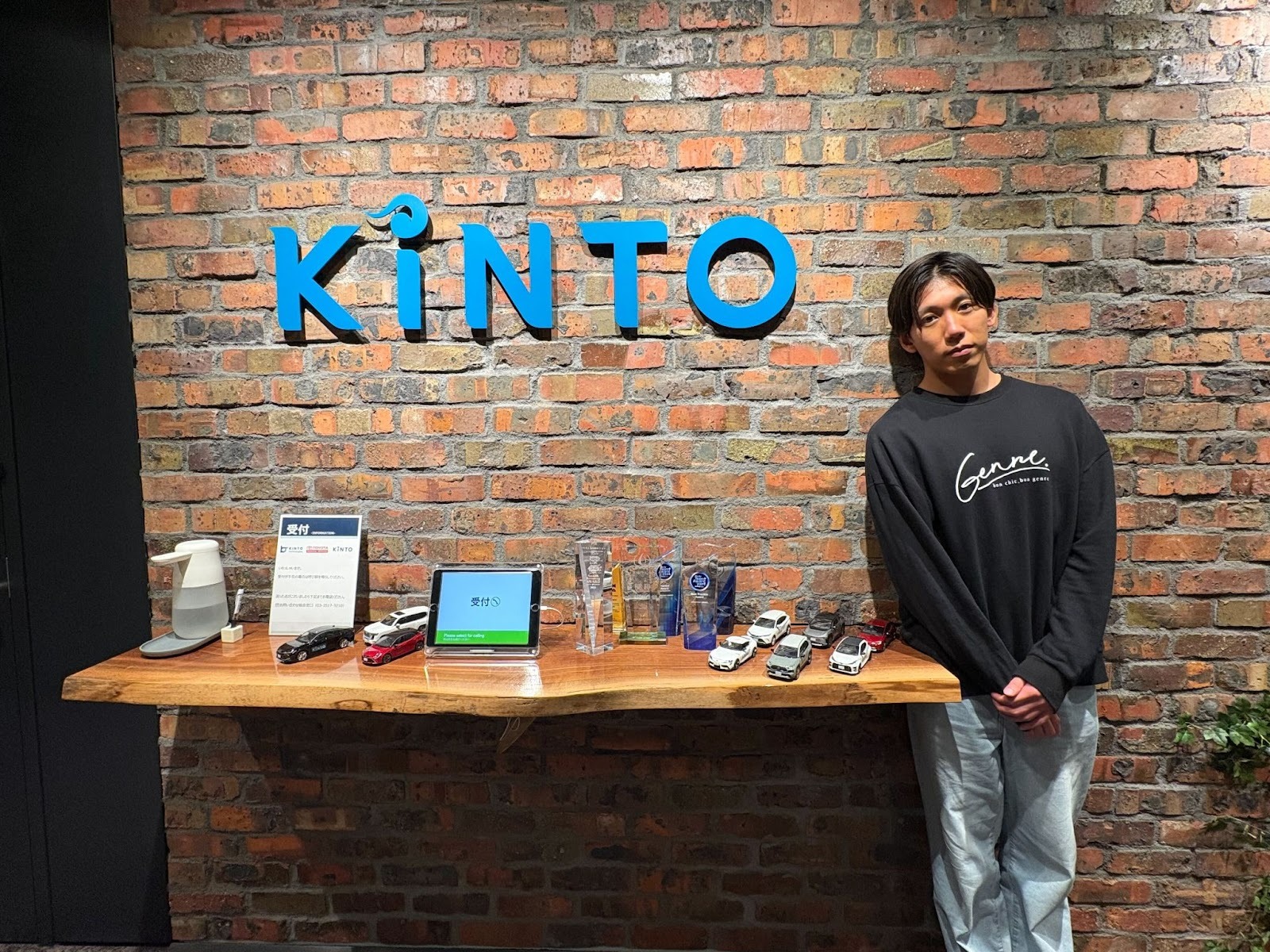
KINTO’s marketing mission extends beyond maximizing contract volume. According to Mr. Nagao from the Digital Marketing Group:
“Our mission goes beyond simply maximizing the number of contracts. ROAS differs by vehicle model, and retention rates vary depending on the subscription plan. We focus on how to reach users who not only contribute more value to the business but are also likely to remain satisfied long term.”
To support this objective, the team leverages first-party data and a CDP (Customer Data Platform) to execute advanced data-driven marketing strategies.
However, as AI-driven campaigns like P-MAX became central to their strategy, concerns emerged.
“Our biggest challenge was balancing aggressive investment in growth with maintaining data quality.”
Low-quality or fraudulent traffic risked contaminating machine learning signals. If invalid clicks were included in optimization data, Google’s algorithms could misinterpret performance signals, reducing overall bidding precision.
Brand safety was also a priority.
“For us, protecting Toyota’s brand safety and maintaining strict data hygiene are issues closely tied to executive-level priorities.”
Initially, the team handled suspicious traffic manually. As Google Ads investment scaled, this approach became unsustainable.
The Solution
Automated Protection Designed for In-House Teams
KINTO evaluated multiple tools before selecting Spider AF. The decision centered on two primary factors: automation and transparency.
“The key factor was its ability to create a clean data environment capable of supporting advanced bidding strategies, combined with seamless integration suited for in-house operations.”
With a lean internal team, operational efficiency was critical. Spider AF’s API integration with Google Ads automatically excludes detected fraudulent IPs from campaigns.
“This level of automated defense enables us to execute sophisticated data strategies without increasing operational burden.”
Visualization also played an important role in the decision.
“Ad fraud often feels like a black box. Spider AF’s dashboard made the situation transparent. We were confident we could clearly demonstrate cost savings and risk mitigation to internal stakeholders.”
The Results
Quantitative and Strategic Gains
Within approximately four months of implementation, KINTO achieved measurable performance improvements.
Key Outcomes:
- Reduced CPA for online sales by over ¥3,000 (~$20 USD)
- Improved bidding precision
- Increased operational efficiency through automation
- Greater confidence in AI-driven optimization
Mr. Nagao explains:
“Quantitatively, we reduced CPA for online sales by more than ¥3,000.”
Beyond cost reduction, the quality of optimization improved.
“By eliminating fraudulent traffic, Google’s machine learning can now more accurately identify truly valuable users as signals.”
The team also observed improved downstream performance metrics:
“We have also seen improvement in the ratio of applications to actual service activation, indicating that bidding optimization is functioning as intended.”
Organizational Impact
Increased Confidence in Data-Driven Growth
One of the most significant changes was internal confidence in campaign scaling.
“The greatest impact may be the confidence we now have. Knowing that AI is operating on clean data allows us to scale with conviction.”
Previously, the team questioned the reliability of performance data. With data integrity maintained automatically, focus shifted toward strategic initiatives.
“With Spider AF maintaining data integrity, we can focus more on core strategy development and full-funnel initiatives integrated with our CDP.”
Looking Ahead
Data Quality as the Foundation for Advanced Bidding
As the industry moves deeper into a cookieless era, KINTO sees first-party data as increasingly critical.
“In a cookieless era, the importance of first-party data continues to grow. However, collecting data is not enough. The real question is how to refine it and activate it effectively in advertising.”
The team plans to continue developing advanced strategies such as Value-Based Bidding (VBB) while maintaining brand trust.
“The more advanced the technology, the more critical data quality becomes in determining outcomes.”
Spider AF is positioned as foundational infrastructure supporting this direction.
“We see Spider AF as a foundational partner that provides the baseline assurance required to pursue this approach.”
Conclusion
For KINTO, scaling AI-driven advertising required more than budget expansion. It required confidence in the integrity of the data fueling machine learning.
By implementing Spider AF, the company achieved measurable CPA improvement, strengthened brand safety, and enabled its in-house team to scale campaigns with greater precision and assurance.
For organizations leveraging automated bidding tools like P-MAX, KINTO’s approach demonstrates how indispensable clean data hygiene actually is.


%20ENJAL-banner(NEW).png)
%2520ENJAL-banner(NEW)%2520(2).png)