Spider AF /
Resources /
Articles /
Ads machine learning: how to boost ROI and block ad fraud
Ad Fraud 101
RESEARCH
September 15, 2025

Ads machine learning: how to boost ROI and block ad fraud

In this article

01
What is a click farm?
01
What is a click farm?
01
What is a click farm?
01
What is a click farm?
01
What is a click farm?
Quick take · 30-second version

Ads machine learning is changing how campaigns are planned, targeted, and optimized. Platforms increasingly rely on algorithms to set bids, pick audiences, and assemble creative in real time. Google’s own guidance shows that improving responsive search ads’ Ad Strength can yield about 12% more conversions on average, underscoring the value of AI-led optimization when the right signals are in place.

At the same time, the ad ecosystem is being reshaped by generative AI. Search experiences are moving from static results to conversational answers and AI Overviews, and analysts expect AI-driven ad formats to take a larger slice of budgets over the next few years. In the U.S., AI-powered search ad spending is projected to rise from just over $1B in 2025 to nearly $26B by 2029, which will reward marketers who can feed clean, high-quality data into platform machine learning and protect that data from invalid traffic.

That last point is critical. Machine learning systems only perform as well as the data they learn from. If bots, click farms, data-center traffic, or fake leads poison your training signals, you teach the ad platform to optimize for the wrong outcomes. According to Spider AF's 2025 Ad Fraud White Paper, the average ad fraud rate across web advertising measured in 2024 was 5.1%, and estimated global losses reached $37.7 billion.  The same report found valid clicks convert at roughly twice the rate of invalid ones (2.54% vs. 1.29%), which means that every step you take to keep fraud out of your datasets and conversions improves machine learning performance downstream.

In this guide, you will learn how to use machine learning in advertising responsibly and profitably, and how Spider AF’s protections help your AI-driven campaigns stay fast, efficient, and fraud‑resilient.
What is machine learning in ads?

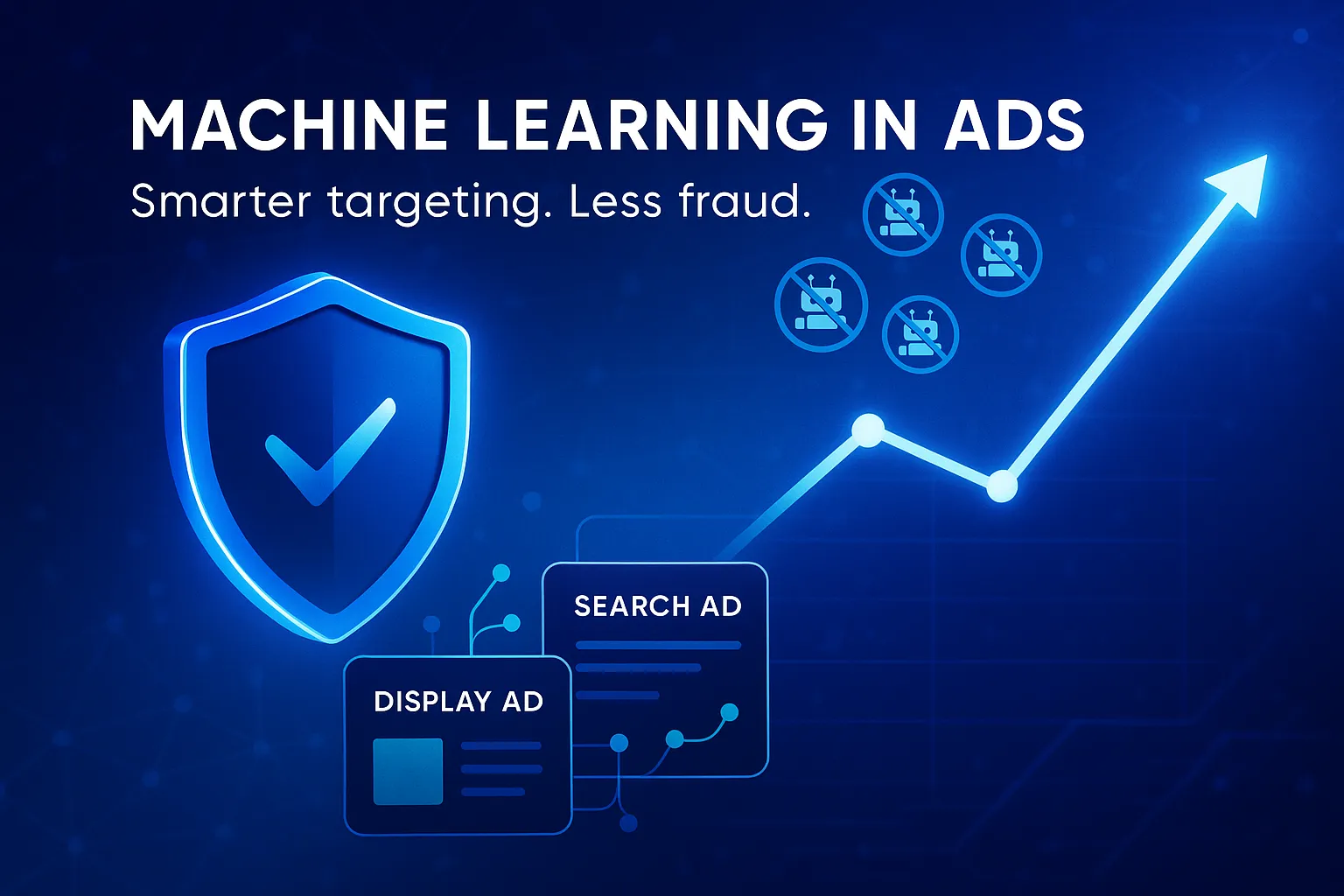
Machine learning in advertising uses algorithms to analyze large, multi‑signal datasets and continuously improve decisions such as who to target, how much to bid, and which creative to serve. It powers audience expansion, predictive bidding, creative assembly, and incrementality modeling across major platforms. External research highlights that ML can place the right ad in front of the right person without relying on personally identifiable information by detecting non‑PII behavioral signals at scale.

On Search, Google’s AI helps set bids, match queries, and assemble the most relevant message for each impression. Advertisers who raise Ad Strength from “Poor” to “Excellent” in responsive search ads commonly see conversion lift, which reflects how well the system learns from richer creative options and cleaner signals.

In emerging AI search experiences, conversational ad placements are also evolving. Reports indicate that ads in AI assistants can attract strong engagement when aligned to the dialogue context, which points to a future where targeting is increasingly intent‑ and conversation‑aware rather than purely keyword‑based.
The risk: when bad inputs teach your ads the wrong lessons

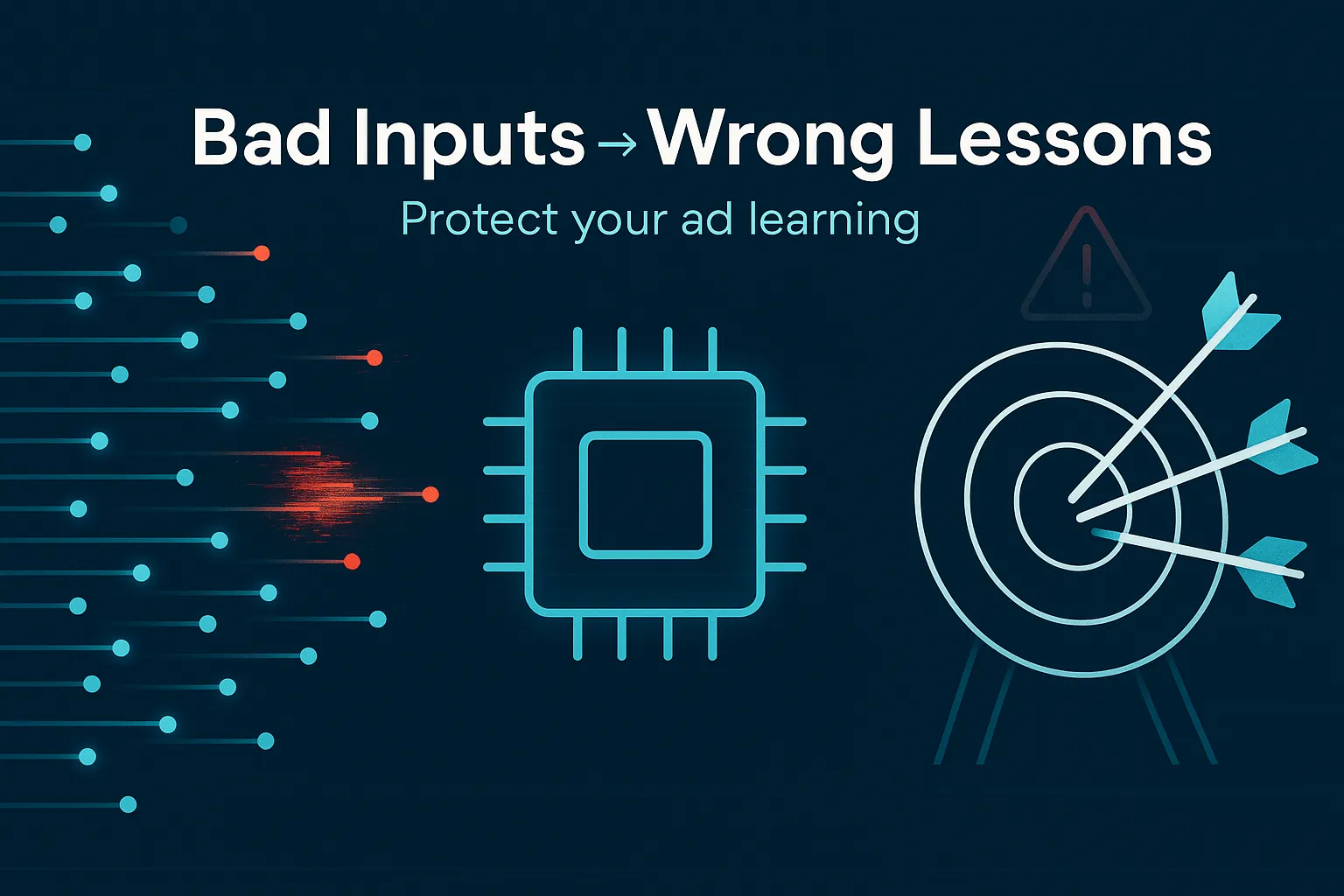
According to Spider AF's 2025 Ad Fraud White Paper, advertisers measured an average 5.1% invalid‑click rate before implementing protection, with some networks showing up to 46.9% fraudulent traffic. The same study estimates $37.7B in global losses, and documents how optimization systems like P‑Max can be abused by bots and low‑quality placements that inflate clicks and fake conversions.

The impact is measurable:

  • Conversion quality drops: Valid clicks convert around 2x more than invalid ones (2.54% vs 1.29%), lowering your modeled value signals when fraud is present. According to Spider AF's 2025 Ad Fraud White Paper, this conversion gap persists across industries.
  • Learning is skewed: If fake leads are counted as goals, automated bidding learns to chase the cheapest fraudulent conversions rather than qualified customers. One documented case showed that, after Spider AF’s Fake Lead Protection integrated with the CRM to filter training data, ROI improved by 152% and CPC dropped by 85% while valid conversions held. According to Spider AF's 2025 Ad Fraud White Paper, that shift came from cleaning the conversions that the platform used for learning.

Academic and industry literature reinforces that machine learning is well suited to detect fraud patterns at scale, but it works best when paired with domain‑specific rules, brand safety controls, and human review.
Make your ads ML‑ready: a practical clean‑data checklist

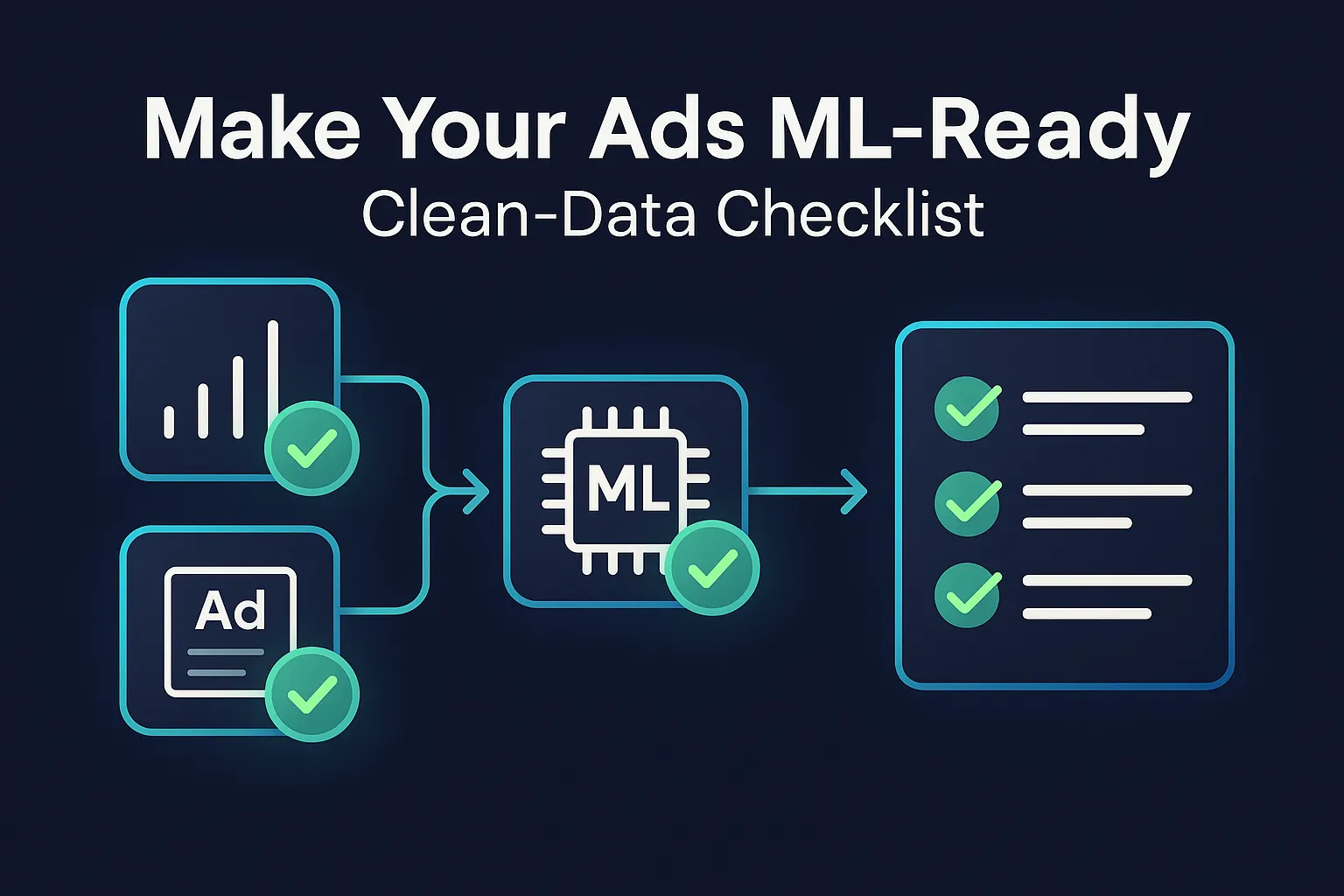
1) Block invalid traffic before it touches your goals

Use Spider AF PPC Protection to detect and block invalid clicks automatically. The platform evaluates traffic in real time, then updates IP and audience exclusion lists on supported networks like Google and Meta at regular intervals. It also flags poor placements, including P‑Max and Display inventory known for misclicks or made‑for‑advertising (MFA) patterns. You get a full invalid‑click log and reports to analyze where fraud originates.

2) Protect conversions with CRM‑based verification

Spider AF Fake Lead Protection connects post‑click conversion data to your CRM to verify leads in real time, remove fake submissions, and prevent poisoned conversions from informing bid strategies. According to Spider AF's 2025 Ad Fraud White Paper, teams that removed fake leads from optimization data achieved large ROI gains without losing legitimate conversions.

3) Secure client‑side scripts that handle forms and payments

Malicious or compromised third‑party scripts can exfiltrate form data and produce fraudulent events. SiteScan inventories every client‑side script, monitors for tampering, and enforces script allow‑lists. It also supports compliance with PCI DSS v4.0.1 client‑side security mandates taking full effect on March 31, 2025.
4) Feed the right signals into platform AI

  • Use conversion actions that reflect business value (qualified leads, opportunities, sales) and de‑weight soft goals.
  • Map offline conversions back to ad platforms where possible to strengthen learning.
  • Maintain clean audience exclusions and location controls to prevent waste that can bias ML allocation. Google’s own documentation stresses steering controls like pinning, negative keywords, and campaign guardrails to keep AI aligned with strategy.

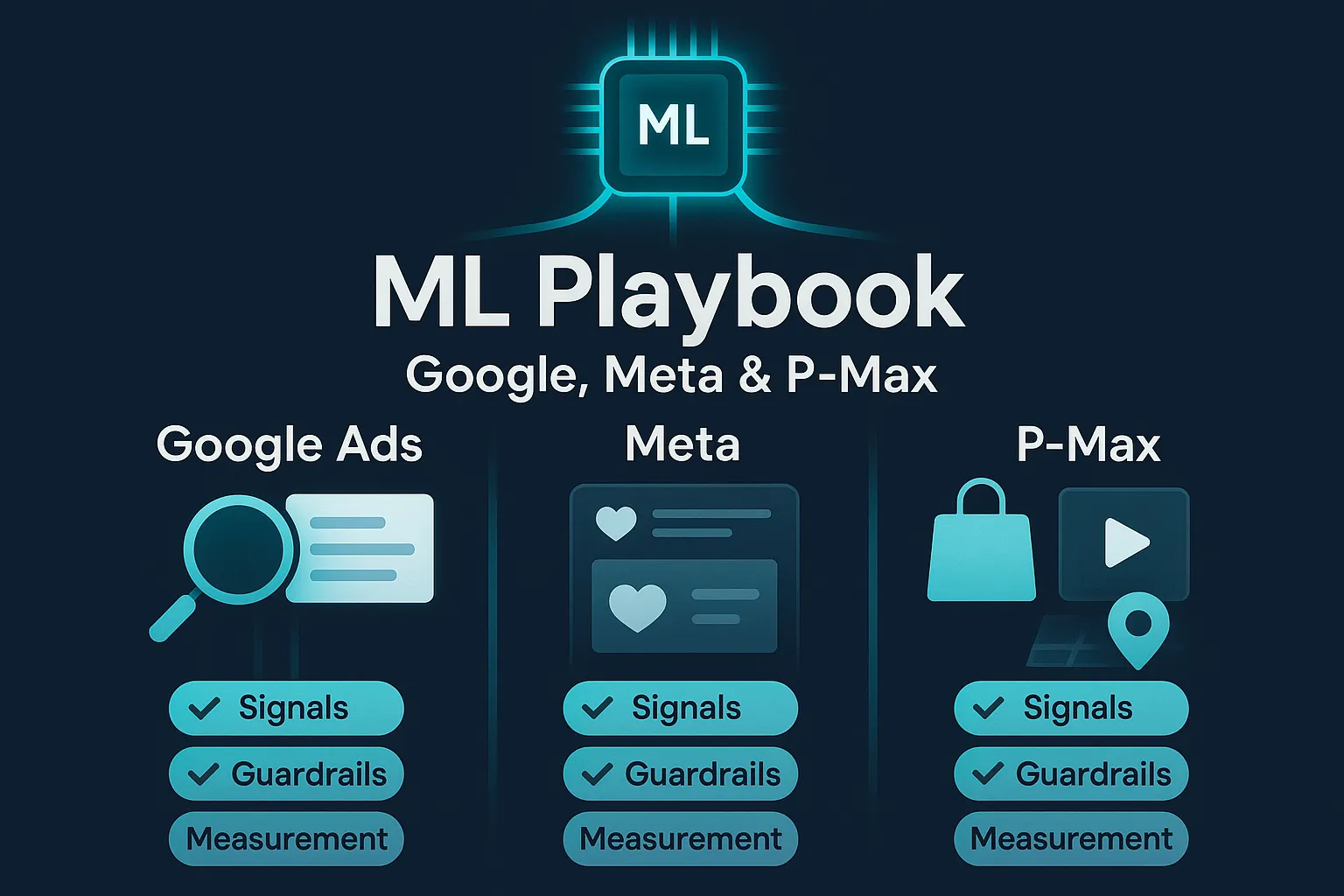
An ML playbook for Google Ads, Meta, and P‑Max

Google Search and P‑Max

  • Provide diverse headlines and descriptions to maximize Ad Strength; allow the system to test combinations and learn.
  • Exclude invalid IPs, audiences, and poor placements automatically through Spider AF to keep training data clean.
  • If you run P‑Max, review placement and search categories regularly. Spider AF can block MFA, low‑quality, and non‑brand‑safe placements to prevent skewed learning.

Meta

  • Use audience exclusions synced from Spider AF to prevent remarketing to known invalid users.
  • Optimize for value‑based events; confirm that conversions reflect verified outcomes rather than raw form submissions.

Measurement and guardrails

  • Track lift in qualified conversions, not just total volume.
  • Compare pre‑ and post‑filter learning periods to see if CPA drops while lead quality holds or improves.
  • Where possible, pair platform ML with custom anomaly detection to flag traffic spikes, geo anomalies, and device patterns common in click fraud. Research and field practice both show hybrid human‑in‑the‑loop approaches outperform automation alone for fraud detection.

FAQs

Is machine learning “set and forget”?

No. Algorithms accelerate testing and optimization, but they follow your data. Without protections against invalid traffic and fake leads, ML can optimize for the wrong objectives. According to Spider AF's 2025 Ad Fraud White Paper, valid clicks convert roughly 2x more than invalid ones, so cleaning signals directly raises modeled performance.

Does AI advertising really change user behavior?

AI‑driven formats are expanding. Analysts expect AI search ads to represent a meaningful share of search budgets by 2029, which implies growing inventory and engagement in conversational environments.

What are the main benefits of ML in ads when done right?

Better audience targeting, smarter bidding, faster creative iteration, and improved measurement. External sources highlight the ability to predict intent and deliver relevance at scale without PII reliance when the right behavioral signals are present.

Conclusion

Machine learning can turn campaigns into fast‑learning systems that improve every week. To make that happen, you need clean, verified signals and strong protection against invalid traffic and fake leads.

Recommended Spider AF products for this use case

Start with a free trial and see how much cleaner your platform learning becomes when you remove fraud from the loop.

FREE SCAN

See your account's invalid traffic in 24 hours.

Spider AF will quantify exactly how much of your last 30 days of paid spend went to bots and click farms.

No credit card
1-line install
Cancel any time
Or book a 20-min demo
FAQ

People also ask.

Q 01 Are click farms illegal? +
In most jurisdictions, click farms violate ad-network terms of service and consumer-protection laws — but enforcement is patchy and cross-border. The FTC has taken action against fake-engagement operations, and Japan's METI has issued guidance treating fake reviews and bot traffic as deceptive practices. The practical reality: legal action is slow; technical blocking is fast.
Q 02 How is a click farm different from a botnet? +
Click farms typically use real humans (or human-supervised devices) to evade behavioral detection — they pass CAPTCHAs, mimic mouse movement, even simulate purchase journeys. Botnets are fully automated and easier to fingerprint. Modern fraud usually blends both: bots for volume, human "supervisors" for the high-value clicks.
Q 03 Can Google Ads or Meta detect click farms on their own? +
Both networks credit obviously-invalid clicks, but their detection runs on aggregated, post-hoc statistical signals — they refund days or weeks later. By then, your bidding algorithms have already optimized toward the polluted data. Independent, real-time detection at the click layer is what closes the loop.
Q 04 Will blocking click-farm traffic hurt my reach? +
No. Blocking invalid clicks only removes traffic that was never going to convert. The downstream effect is usually the opposite — your bidding model gets cleaner training signal and starts spending more on audiences that actually convert.
Q 05 How fast can Spider AF block click-farm traffic? +
Sub-200ms detection at the click event, with auto-sync to Google, Meta, TikTok, and Microsoft exclusion lists in seconds. Most accounts see meaningful blocking within 24 hours of installing the tag.

Ads machine learning: how to boost ROI and block ad fraud

Table of Contents

Ads machine learning is changing how campaigns are planned, targeted, and optimized. Platforms increasingly rely on algorithms to set bids, pick audiences, and assemble creative in real time. Google’s own guidance shows that improving responsive search ads’ Ad Strength can yield about 12% more conversions on average, underscoring the value of AI-led optimization when the right signals are in place.

At the same time, the ad ecosystem is being reshaped by generative AI. Search experiences are moving from static results to conversational answers and AI Overviews, and analysts expect AI-driven ad formats to take a larger slice of budgets over the next few years. In the U.S., AI-powered search ad spending is projected to rise from just over $1B in 2025 to nearly $26B by 2029, which will reward marketers who can feed clean, high-quality data into platform machine learning and protect that data from invalid traffic.

That last point is critical. Machine learning systems only perform as well as the data they learn from. If bots, click farms, data-center traffic, or fake leads poison your training signals, you teach the ad platform to optimize for the wrong outcomes. According to Spider AF's 2025 Ad Fraud White Paper, the average ad fraud rate across web advertising measured in 2024 was 5.1%, and estimated global losses reached $37.7 billion.  The same report found valid clicks convert at roughly twice the rate of invalid ones (2.54% vs. 1.29%), which means that every step you take to keep fraud out of your datasets and conversions improves machine learning performance downstream.

In this guide, you will learn how to use machine learning in advertising responsibly and profitably, and how Spider AF’s protections help your AI-driven campaigns stay fast, efficient, and fraud‑resilient.

What is machine learning in ads?

Machine learning in advertising uses algorithms to analyze large, multi‑signal datasets and continuously improve decisions such as who to target, how much to bid, and which creative to serve. It powers audience expansion, predictive bidding, creative assembly, and incrementality modeling across major platforms. External research highlights that ML can place the right ad in front of the right person without relying on personally identifiable information by detecting non‑PII behavioral signals at scale.

On Search, Google’s AI helps set bids, match queries, and assemble the most relevant message for each impression. Advertisers who raise Ad Strength from “Poor” to “Excellent” in responsive search ads commonly see conversion lift, which reflects how well the system learns from richer creative options and cleaner signals.

In emerging AI search experiences, conversational ad placements are also evolving. Reports indicate that ads in AI assistants can attract strong engagement when aligned to the dialogue context, which points to a future where targeting is increasingly intent‑ and conversation‑aware rather than purely keyword‑based.

The risk: when bad inputs teach your ads the wrong lessons

According to Spider AF's 2025 Ad Fraud White Paper, advertisers measured an average 5.1% invalid‑click rate before implementing protection, with some networks showing up to 46.9% fraudulent traffic. The same study estimates $37.7B in global losses, and documents how optimization systems like P‑Max can be abused by bots and low‑quality placements that inflate clicks and fake conversions.

The impact is measurable:

  • Conversion quality drops: Valid clicks convert around 2x more than invalid ones (2.54% vs 1.29%), lowering your modeled value signals when fraud is present. According to Spider AF's 2025 Ad Fraud White Paper, this conversion gap persists across industries.
  • Learning is skewed: If fake leads are counted as goals, automated bidding learns to chase the cheapest fraudulent conversions rather than qualified customers. One documented case showed that, after Spider AF’s Fake Lead Protection integrated with the CRM to filter training data, ROI improved by 152% and CPC dropped by 85% while valid conversions held. According to Spider AF's 2025 Ad Fraud White Paper, that shift came from cleaning the conversions that the platform used for learning.

Academic and industry literature reinforces that machine learning is well suited to detect fraud patterns at scale, but it works best when paired with domain‑specific rules, brand safety controls, and human review.

Make your ads ML‑ready: a practical clean‑data checklist

1) Block invalid traffic before it touches your goals

Use Spider AF PPC Protection to detect and block invalid clicks automatically. The platform evaluates traffic in real time, then updates IP and audience exclusion lists on supported networks like Google and Meta at regular intervals. It also flags poor placements, including P‑Max and Display inventory known for misclicks or made‑for‑advertising (MFA) patterns. You get a full invalid‑click log and reports to analyze where fraud originates.

2) Protect conversions with CRM‑based verification

Spider AF Fake Lead Protection connects post‑click conversion data to your CRM to verify leads in real time, remove fake submissions, and prevent poisoned conversions from informing bid strategies. According to Spider AF's 2025 Ad Fraud White Paper, teams that removed fake leads from optimization data achieved large ROI gains without losing legitimate conversions.

3) Secure client‑side scripts that handle forms and payments

Malicious or compromised third‑party scripts can exfiltrate form data and produce fraudulent events. SiteScan inventories every client‑side script, monitors for tampering, and enforces script allow‑lists. It also supports compliance with PCI DSS v4.0.1 client‑side security mandates taking full effect on March 31, 2025.

4) Feed the right signals into platform AI

  • Use conversion actions that reflect business value (qualified leads, opportunities, sales) and de‑weight soft goals.
  • Map offline conversions back to ad platforms where possible to strengthen learning.
  • Maintain clean audience exclusions and location controls to prevent waste that can bias ML allocation. Google’s own documentation stresses steering controls like pinning, negative keywords, and campaign guardrails to keep AI aligned with strategy.

An ML playbook for Google Ads, Meta, and P‑Max

Google Search and P‑Max

  • Provide diverse headlines and descriptions to maximize Ad Strength; allow the system to test combinations and learn.
  • Exclude invalid IPs, audiences, and poor placements automatically through Spider AF to keep training data clean.
  • If you run P‑Max, review placement and search categories regularly. Spider AF can block MFA, low‑quality, and non‑brand‑safe placements to prevent skewed learning.

Meta

  • Use audience exclusions synced from Spider AF to prevent remarketing to known invalid users.
  • Optimize for value‑based events; confirm that conversions reflect verified outcomes rather than raw form submissions.

Measurement and guardrails

  • Track lift in qualified conversions, not just total volume.
  • Compare pre‑ and post‑filter learning periods to see if CPA drops while lead quality holds or improves.
  • Where possible, pair platform ML with custom anomaly detection to flag traffic spikes, geo anomalies, and device patterns common in click fraud. Research and field practice both show hybrid human‑in‑the‑loop approaches outperform automation alone for fraud detection.

FAQs

Is machine learning “set and forget”?

No. Algorithms accelerate testing and optimization, but they follow your data. Without protections against invalid traffic and fake leads, ML can optimize for the wrong objectives. According to Spider AF's 2025 Ad Fraud White Paper, valid clicks convert roughly 2x more than invalid ones, so cleaning signals directly raises modeled performance.

Does AI advertising really change user behavior?

AI‑driven formats are expanding. Analysts expect AI search ads to represent a meaningful share of search budgets by 2029, which implies growing inventory and engagement in conversational environments.

What are the main benefits of ML in ads when done right?

Better audience targeting, smarter bidding, faster creative iteration, and improved measurement. External sources highlight the ability to predict intent and deliver relevance at scale without PII reliance when the right behavioral signals are present.

Conclusion

Machine learning can turn campaigns into fast‑learning systems that improve every week. To make that happen, you need clean, verified signals and strong protection against invalid traffic and fake leads.

Recommended Spider AF products for this use case

Start with a free trial and see how much cleaner your platform learning becomes when you remove fraud from the loop.

SpiderAF
アドフラウド
Spider Labs